Phoenix Housing Market is Slowing, But That's Not Bad News
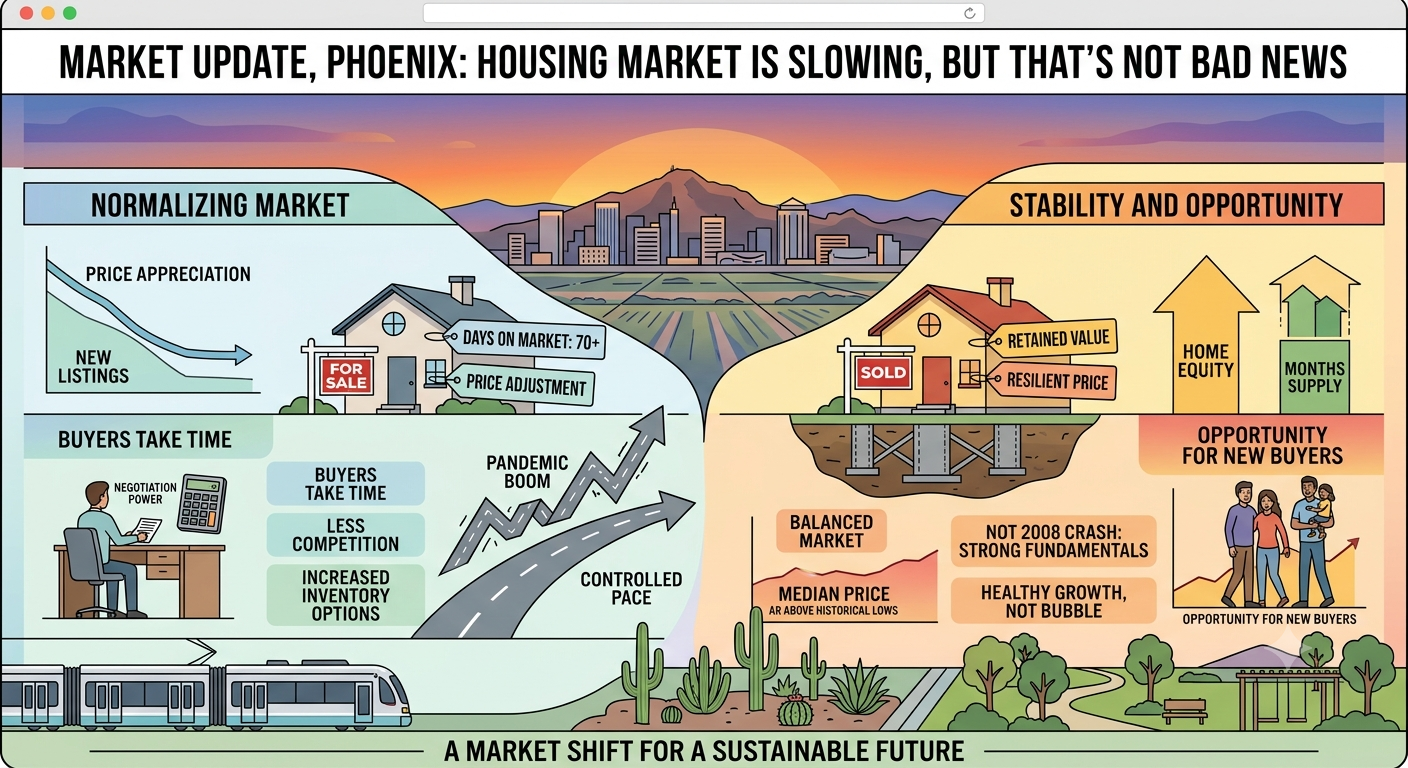
Phoenix Housing Market Is Slowing, But That's Not Bad News
For the past several years, the Phoenix metropolitan housing market has been defined by rapid appreciation, multiple offers, waived contingencies, and sellers holding nearly all the negotiating power. That environment is changing.
Today's market is no longer driven by urgency, it's driven by strategy.
As a Certified Residential Appraiser, I spend my days analyzing market data, comparable sales, and neighborhood trends. From that perspective, what we're seeing is not a market crash. It's a normalization after an unprecedented period of appreciation.
What Is Causing the Slowdown?
Several factors are contributing to the slower pace of the market.
Higher mortgage rates have reduced affordability, causing many buyers to become more selective. At the same time, inventory has steadily increased throughout much of the Phoenix metro area, giving buyers more choices than they've had in years. Homes are taking longer to sell, and price reductions have become much more common than they were during the pandemic housing boom. Nationally, buyers are regaining negotiating leverage as inventory grows and price cuts increase, with many Sun Belt markets: including Phoenix leading that trend.
This shift doesn't mean demand has disappeared. People continue to relocate to Arizona for employment opportunities, lifestyle, and climate. The difference is that buyers now have the time to compare properties, negotiate terms, and make informed decisions rather than rushing into contracts.
What This Means for Sellers
The days of simply putting a home on the market and expecting multiple offers over asking price are becoming less common.
Today's successful sellers understand that pricing is more important than ever. Buyers have options, and if a property is overpriced even by a small margin; it often sits on the market while competing homes sell.
Pricing based on yesterday's sales instead of today's competition can result in multiple price reductions and extended marketing time.
Presentation also matters. Homes that are clean, updated, professionally photographed, and marketed effectively continue to attract attention. Well prepared homes priced appropriately are still selling, even in a slower market.
In many cases, sellers should also be prepared to negotiate closing cost assistance, repairs, or other concessions that were virtually unheard of just a few years ago.
What This Means for Buyers
For buyers, this market presents opportunities that haven't existed for several years.
With increased inventory comes increased negotiating power. Buyers may have greater success negotiating price, seller-paid closing costs, repair requests, or mortgage rate buy downs. Many homes are remaining on the market longer, allowing buyers to perform proper due diligence without the intense pressure of competing against numerous offers.
However, buyers shouldn't confuse a slower market with a declining market across every neighborhood.
Real estate remains highly localized. Some communities continue to experience strong demand, particularly those with limited inventory, quality schools, or desirable locations. Other areas are seeing more noticeable price adjustments as supply outpaces demand.
Every Neighborhood Is Different
One of the biggest misconceptions about real estate is that the entire Phoenix metro moves in the same direction at the same speed.
It doesn't.
Communities such as Scottsdale, Chandler, Gilbert, Mesa, Peoria, Surprise, Queen Creek, and parts of Phoenix each have their own supply and demand dynamics. Even within the same city, one subdivision may remain highly competitive while another experiences increasing days on market and more frequent price reductions.
This is where local market knowledge becomes invaluable.
Why Accurate Valuation Matters More Than Ever
As an appraiser, I've always believed that market value isn't determined by what a seller hopes to receive or what a buyer wants to pay. It's determined by what informed buyers are actually willing to pay in today's market.
In a rapidly appreciating market, pricing errors can sometimes go unnoticed because rising values quickly compensate.
In a balanced or slowing market, those same pricing mistakes become much more costly.
Whether buying or selling, decisions should be based on current market data: not headlines, social media opinions, or last year's comparable sales.
The Bottom Line
The Phoenix housing market isn't crashing. It's transitioning into a healthier, more balanced environment.
Buyers have more opportunities and greater negotiating power. Sellers can still achieve excellent results, but success now depends on accurate pricing, strong presentation, and realistic expectations.
Markets naturally evolve. The frenzy of recent years was never sustainable, and today's conditions represent a return to fundamentals.
For both buyers and sellers, the best decisions are still made with reliable market data, local expertise, and a clear understanding of current market conditions: not fear or speculation.
If you have any questions about the market, feel free to call Benson Appraisals at 80-926-8528
